Underfloor heating and tiles: a practical guide
Tiles work well with many underfloor-heating systems, but the substrate, commissioning process, adhesive and movement provision all need to be considered.
Preparation before tiling
The heating system should be installed and tested in accordance with its instructions before the tile finish is completed. The floor also needs to be stable, appropriately prepared and sufficiently flat.
Where a levelling or decoupling layer is specified, this needs to be incorporated into the build-up before setting out.
For anyone researching underfloor heating with tiles, the most useful approach is to look at the practical conditions behind the finish rather than treating the job as a single generic task. The heating system, floor build-up and tile installation need to be designed as one assembly rather than separate trades working without coordination. Electric mats or cables should be installed on a suitable substrate and protected from damage during later work. Water-based systems also rely on a stable screed or specified build-up that has cured appropriately. Final floor height should be considered early because heating, levelling, membrane, adhesive and tile all add thickness. This is where an experienced tiler can add value: not by using more technical language, but by checking the details that affect the finished surface and explaining the options before work is committed. For a homeowner, the practical test is simple: the proposed method should make sense for the exact room, the chosen tile and the way the area will be used, rather than relying on a one-size-fits-all rule.
Key points
- Confirm the heating system type
- Test before covering
- Check floor build-up
- Use suitable adhesive and grout
- Allow for movement
Do not rush commissioning
Newly tiled floors should be allowed to cure before the heating is brought back into service. Heating too quickly can place unnecessary stress on adhesives and grout.
Follow the relevant product guidance and raise temperatures gradually rather than switching the system immediately to full output.
The specification also needs to work as one system. That means the tile, substrate, preparation products and installation method should be considered together. New heating should not normally be driven to full temperature immediately after tiling because adhesive, grout and screed need the specified curing periods. Commissioning should follow the heating and installation product guidance, often with gradual temperature changes. Rapid thermal changes can place unnecessary stress on the tiled assembly. The homeowner should keep the product information so future operation follows the correct limits. This is where an experienced tiler can add value: not by using more technical language, but by checking the details that affect the finished surface and explaining the options before work is committed. For a homeowner, the practical test is simple: the proposed method should make sense for the exact room, the chosen tile and the way the area will be used, rather than relying on a one-size-fits-all rule.
KB Tiling tip
Agree the heating commissioning procedure before handover so everyone knows when it can be used.Tile choice and comfort
Porcelain and ceramic tiles conduct heat effectively and are often chosen for heated floors. Rugs, furniture layout and insulation beneath the system also influence how the room feels in use.
The full floor construction matters, not only the tile on top.
Good setting out and early decisions usually make the finished result easier to control, because problems are cheaper to solve on paper than after fixing has started. Ceramic and porcelain tiles conduct heat efficiently, which is one reason they are popular over underfloor heating. Thicker finishes and rugs can influence how quickly heat reaches the room. Movement accommodation and flexible system components may be specified depending on the build-up. Comfortable performance comes from the complete heating design, insulation and controls, not from tile choice alone. This is where an experienced tiler can add value: not by using more technical language, but by checking the details that affect the finished surface and explaining the options before work is committed. For a homeowner, the practical test is simple: the proposed method should make sense for the exact room, the chosen tile and the way the area will be used, rather than relying on a one-size-fits-all rule.
Common mistakes to avoid
Most avoidable problems begin with an assumption that was never checked. Common examples include installing heating over an unstable base, failing to test electric cables before they are covered, and forgetting the extra floor height at doors and thresholds. Each can look minor at the planning stage, yet any one of them can change the layout, the amount of preparation or the time needed to complete the work. The safer approach is to surface those decisions early and write them into the agreed scope. That gives the installer a clear standard to work to and gives the client something meaningful to compare when reviewing quotations.
Other mistakes are more likely to show up once work is under way: switching the heating on too soon after tiling, using incompatible levelling or adhesive products, and drilling into a finished heated floor without knowing cable or pipe locations. These are not reasons to overcomplicate a straightforward tiling project. They are reminders that a durable finish depends on a chain of small decisions being made in the right order. If something important changes after the work starts, stop and reassess the effect on materials, preparation, finished levels and programme rather than forcing the original plan to fit a different situation.
Key points
- installing heating over an unstable base
- failing to test electric cables before they are covered
- forgetting the extra floor height at doors and thresholds
- switching the heating on too soon after tiling
- using incompatible levelling or adhesive products
- drilling into a finished heated floor without knowing cable or pipe locations
A sensible way to plan the work
A sensible sequence keeps the project understandable. Start by confirm the heating design and substrate, then plan insulation and finished floor height. Once those basics are known, install and test the heating system. That order matters because design choices are easier to judge when the physical condition of the room is already understood. It also reduces the chance of buying materials for a layout that later has to change. Before fixing starts, the client and tiler should be able to describe the intended finish, the preparation included and the main details that need particular attention.
From there, encapsulate or level where the system requires it, tile with compatible materials and movement details, and finally allow full curing and then commission gradually. Keeping this sequence visible is especially useful on renovations where several trades are involved. Tiling often sits between preparation work and final fitting, so unclear responsibility can create delays. A short written scope, a few marked setting-out lines and photographs of concealed preparation can be more valuable than a long informal conversation because everyone can refer back to the same decisions.
Key points
- confirm the heating design and substrate
- plan insulation and finished floor height
- install and test the heating system
- encapsulate or level where the system requires it
- tile with compatible materials and movement details
- allow full curing and then commission gradually
Questions worth asking before work begins
A good pre-start conversation should answer practical questions rather than simply confirm a date. Ask: What is the total finished floor build-up? How will the heating be tested before covering? Which levelling and adhesive products are approved? Clear answers help separate what is included from what is assumed. They also make it easier to identify where another trade, supplier or product manufacturer needs to provide information before the tiler can proceed.
It is also worth asking: How long must the floor cure before commissioning? Where are movement joints required? Will a record of cable or pipe positions be kept? The aim is not to interrogate the installer; it is to make the scope transparent. A professional response should explain the reasoning in plain English and, where a product-specific decision matters, point back to the relevant manufacturer's instructions. That is a stronger basis for a project than relying on a vague promise that everything will be 'fine'.
Key points
- What is the total finished floor build-up?
- How will the heating be tested before covering?
- Which levelling and adhesive products are approved?
- How long must the floor cure before commissioning?
- Where are movement joints required?
- Will a record of cable or pipe positions be kept?
What this means for projects in Essex
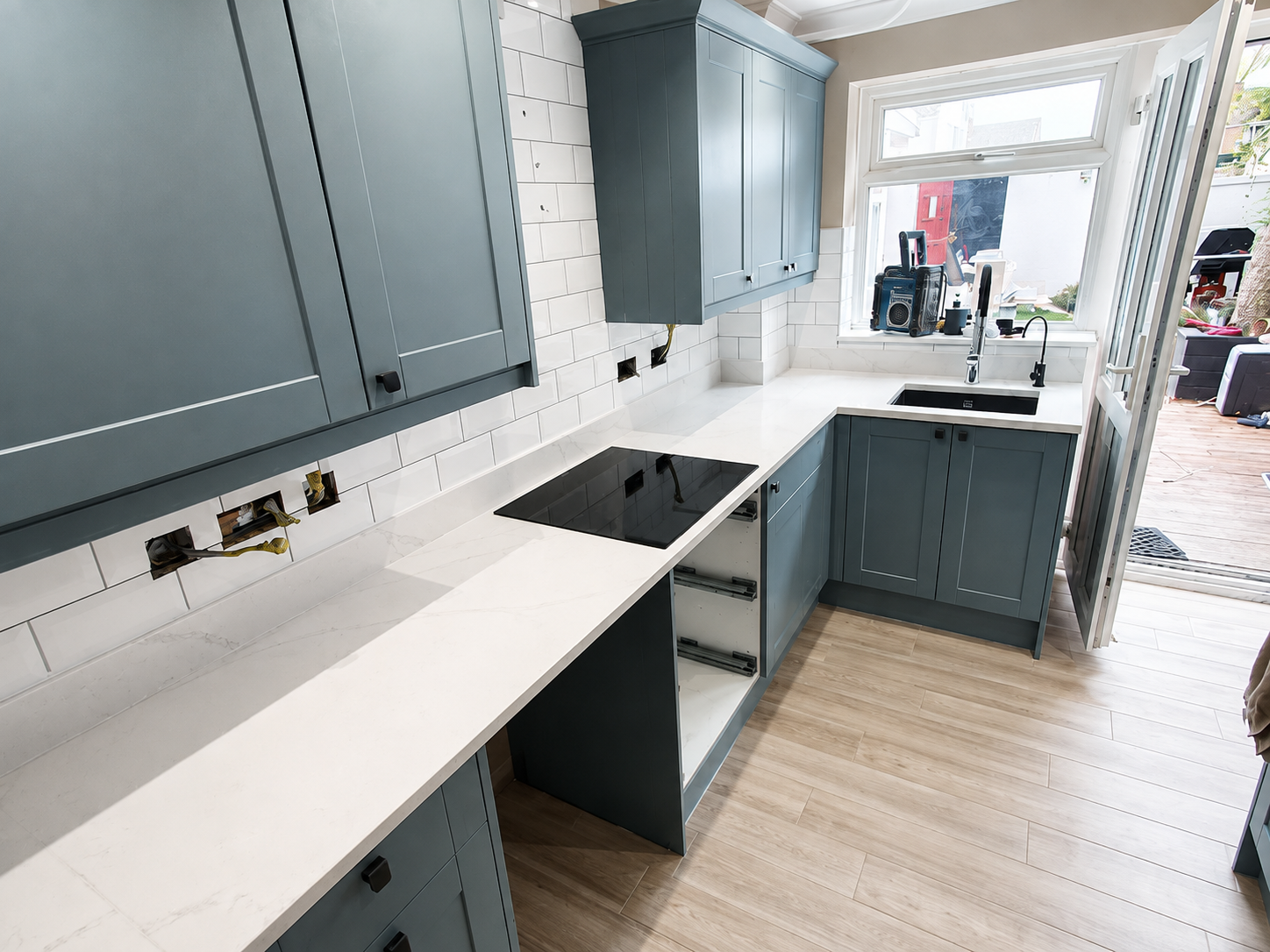
Underfloor heating is common in essex kitchen extensions and bathroom refurbishments where homeowners want to remove radiators or create an even floor finish. Extensions can introduce junctions between old and new slabs, making substrate preparation and movement planning especially important.
The heating installer and tiler should agree the sequence so one trade does not create a surface the next system cannot accept. KB Tiling Essex works with domestic and commercial tiling projects across Chelmsford, Essex and surrounding areas, so local planning is less about inserting place names into a page and more about understanding the practical conditions of real properties and sites. If you are comparing options for underfloor heating with tiles, use local examples as context, but make the final decision around your own substrate, tile, room and specification.
Frequently asked questions about underfloor heating with tiles
Are tiles good with underfloor heating? Yes. Ceramic and porcelain conduct heat well and are widely used with correctly designed underfloor heating systems.
Can I turn the heating on as soon as the grout is dry? Follow the adhesive, grout, screed and heating manufacturer's commissioning instructions. Full heat too early can stress materials that are still curing.
Do I need flexible adhesive? The correct adhesive is selected for the tile, substrate and heating system. Many heated floors use deformable products, but the exact specification should be confirmed.
Can electric heating cables be repaired if damaged? Specialist repair may be possible, but prevention is better. Testing and recording the system before it is covered is essential.
Will large tiles work with underfloor heating? They can, provided the floor is flat, the fixing system is appropriate and movement and coverage are handled correctly.
Final planning checklist
Before committing to the work, review the project in one pass. Confirm the substrate, tile specification, layout, preparation, installation materials, grout or joint details, access and programme. If the project involves electric underfloor heating tiles, wet underfloor heating tiles or tile over underfloor heating, make sure those choices are reflected in the written scope rather than left as verbal assumptions. Keep product names and batch information where relevant, retain a small project record, and store sensible spare material after completion. These simple habits make future maintenance or local repairs much easier.
SEO searches often reduce a tiling decision to one phrase, but a real installation is always more specific. Someone searching for underfloor heating with tiles may be asking about cost, suitability, preparation, appearance or long-term maintenance at the same time. The best answer is therefore the one that connects those questions instead of repeating a keyword. Use this guide as a framework, then confirm the exact method for your room with the installer and the manufacturers of the products being used.
One useful point to pause on is any detail that changes the proposed system rather than just the appearance. If you discover failing to test electric cables before they are covered, if the chosen product changes, or if the answer to “What is the total finished floor build-up?” is uncertain, get that clarified before continuing. The same applies when electric underfloor heating tiles or underfloor heating floor preparation introduces a requirement that was not part of the original brief. A short delay to confirm the substrate, product data or finished level is usually easier to manage than removing completed work later. Keep decisions proportionate: not every small variation needs a redesign, but anything affecting adhesion, movement, waterproofing, safety, access or the visible setting-out deserves an explicit decision and, where relevant, confirmation from the product manufacturer.
Final word